


 Request an Appointment
Ocular Allergy Treatment
Ocular Allergy
Treatment
Allergic conjunctivitis is the eye’s surface reacting to pollen, pet dander, dust mites or mold. Itching is often the clue that separates allergy from infection or dry eye. Our team has cared for over one million eyes combined and can examine your eyes and discuss treatment options.
 Microscopic evaluation to confirm the cause
- Prescription antihistamine and mast-cell stabilizers
- Targets allergic inflammation
- Avoids redness-masking drops


Symptoms To Watch For
Signs of Ocular
Allergies
Any of these changes warrant an eye exam soon. Early symptoms are often subtle - don’t wait until vision loss is obvious.
Intense itching, especially in the inner corners of the eyes
The Amsler grid test helps detect this early warning sign of AMD.
Redness and a gritty, burning sensation
A growing blind spot in the center of your visual field is a key symptom.
Excessive tearing or watery discharge
Increased light sensitivity is common in AMD patients.
Swollen or puffy eyelids
Color perception changes as the macula deteriorates.
Sensitivity to light during a reaction
Central vision loss makes facial recognition increasingly difficult.
The Right Products
Why the drops in the
pharmacy aisle can
make it worse
Drops that “get the red out” work by constricting blood vessels. They don’t treat the reaction, and used regularly they cause rebound redness (the eye becomes redder than before).
Prescription Treatment
Prescription antihistamine and mast-cell stabilizer drops target the allergic response. A clinician can determine whether either option fits your symptoms and eye health.
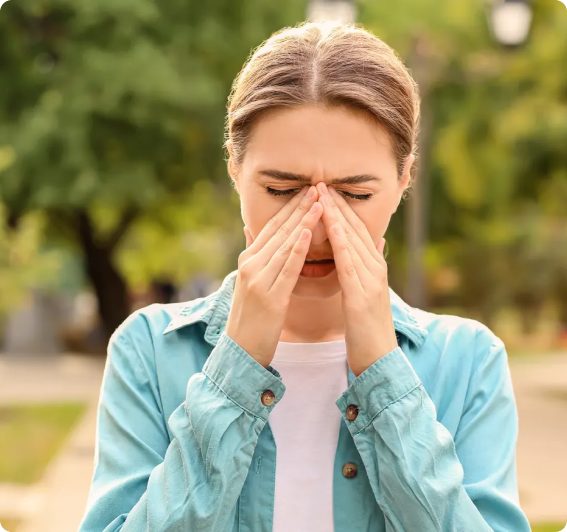
Allergies vs. Dry Eye
Allergies vs.
Dry Eye
Ocular allergies and dry eye disease share many symptoms (redness, burning, and tearing), and people often misdiagnose themselves. Using allergy drops for dry eye, or the other way around, won’t bring relief.
Microscopic evaluation
Confirm the cause before choosing treatment.
Prescription treatment
Antihistamine and mast-cell stabilizer options tailored to your symptoms.
Avoid rebound redness
Steer clear of over-the-counter drops that can make redness worse over time.
Frequently Asked Questions
What are common signs of ocular allergies?
Itching, redness, watery eyes, and puffy eyelids can occur with ocular allergies. Similar symptoms may have other causes, so an eye examination can help clarify what is going on.
How can I tell allergies from an eye infection?
Intense itching in both eyes is common with allergies, while discharge or other symptoms may suggest a different cause. Symptoms overlap, so contact an eye care professional for an assessment rather than relying on symptoms alone.
What treatments may help ocular allergies?
Treatment depends on your symptoms and eye health. Options may include avoiding triggers, cool compresses, or clinician-recommended allergy eye drops; a clinician can help choose an appropriate approach.
Are over-the-counter “redness relief” drops a good choice?
Drops that constrict blood vessels may mask redness and can cause rebound redness when used frequently. Ask an eye care professional or pharmacist before starting drops, especially if symptoms persist or worsen.
Request an Appointment
Share your preferred date and time, along with your contact information.
Online requests are not available yet. Information entered here is not sent or saved. Please call to schedule your appointment.
Send RequestReady when you are
Request an Appointment
To arrange an appointment, call us at (701) 492-3937. Our team will help find a time that works for you.
Office Hours:
 Office Hours:
- Monday - Thursday9:00 AM - 5:00 PM
- Dr. Tufte8:00 AM - 5:00 PM
- Dr. Rene9:00 AM - 5:00 PM
- Friday9:00 AM - 2:00 PM
- Saturday & SundayClosed